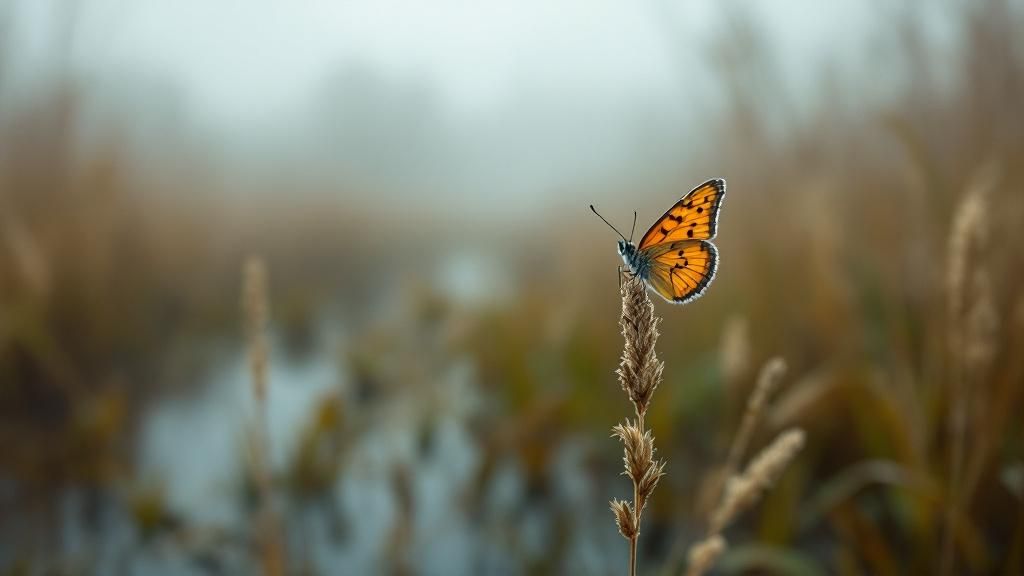
A environmental scientist in Wales is halfway through a pioneering two-year study that could transform how we track the condition of the nation’s peatlands. Georgina Paul, working with Butterfly Conservation, is examining whether the endangered large heath butterfly might serve as a reliable indicator of peat bog condition across some of Wales’s most precious wetland habitats. The project, which started last year and will continue to May 2027, involves counting large heath populations across hundreds of square kilometres of protected peatland, from Ceredigion to the Wrexham-Shropshire border. If effective, the research could give volunteers with a simple yet effective way to track environmental changes whilst also helping address climate change by guaranteeing these vital carbon stores remain healthy and intact.
The Large Heath as Environmental Sentinel
The great heath butterfly, with its characteristic chestnut markings and prominent black markings, has emerged as the subject of this ambitious conservation effort because of its uniquely specialised habitat requirements. Occurring only in wet peatland environments across northern regions of Britain, Ireland, and a small number of scattered Welsh and English locations, the species is completely reliant on a single food source: hare’s-tail cottongrass, a plant that exists only in peat bogs. This high degree of specialisation makes the large heath an perfect ecological indicator—where the butterfly flourishes, the peatland environment is working effectively, and carbon sequestration remains secure.
Georgina Paul argues that by training volunteers to carry out straightforward weekly butterfly tallies along fixed routes, Butterfly Conservation can collect crucial data on peatland health without demanding technical skills. The strategy transforms citizen scientists into environmental monitors, broadening participation in conservation across wetlands throughout Wales. Should the large heath emerge as a dependable marker, the project could substantially alter how land managers and conservation organisations tackle peatland conservation, delivering concrete evidence of recovery progress or deterioration that shapes future safeguarding methods.
- Large heath caterpillars feed exclusively on hare’s-tail cottongrass plants
- Species numbers fell sharply throughout the 1900s
- Now classified as threatened in England and Wales
- Restricted to wet habitats in the north of Britain
Assessing Progress Across the Welsh Wetland Areas
Georgina Paul’s two-year investigation, now halfway through its timeline until May 2027, encompasses an extensive geographical scope that extends throughout Wales’s largest peat bog areas. Her team has been systematically monitoring heath butterfly numbers since the start of the initiative last year, carrying out regular weekly assessments along predetermined routes to gather reliable, standardised information. This methodical approach enables scientists to identify patterns in butterfly abundance that correlate directly with the state of peatlands, establishing a long-term documentation of how these delicate habitats react to conservation work and ecological stresses. The vast scope of the project—spanning hundreds of square kilometres of conservation land—constitutes one of the most extensive butterfly monitoring initiatives Wales has undertaken in the past decade.
The research team is especially interested in identifying quantifiable gains at sites where restoration work has already started, seeking tangible evidence that conservation interventions are yielding positive results for both the large heath butterfly and the broader peatland ecosystem. Beyond traditional butterfly counts, the project is advancing cutting-edge methods, piloting drones to chart habitat distribution and quickly locate significant plant communities. This blend of volunteer-led fieldwork and advanced drone technology creates a robust monitoring framework that can track environmental changes with remarkable detail, ultimately furnishing property owners and conservation groups with the data necessary to make informed management decisions.
Key Investigation Sites and Geographic Scope
- Cors Caron near Tregaron in Ceredigion, a substantial peatland reserve
- Afon Eden in Gwynedd, preserving large heath populations in north Wales
- The Berwyn Range in north-east Wales, covering diverse habitat varieties
- Fenn’s, Whixall and Bettisfield Mosses National Nature Reserve near Wrexham
- All protected areas where large heath butterfly populations are presently located
Why Peatland Health Matters Globally
Peatlands represent one of Earth’s most vital carbon storage systems, yet their value remains overlooked in broader climate debates. These wet environments accumulate partially decomposed plant material over millennia, locking away vast quantities of carbon that would otherwise add to atmospheric greenhouse gases. When peatlands stay wet and intact, they serve as highly effective carbon sinks, sequestering carbon at rates far exceeding most other terrestrial habitats. However, this delicate balance is increasingly endangered by rising global temperatures, which desiccate peat bogs and trigger the release of stored carbon into the atmosphere, creating a vicious cycle that intensifies climate change.
The decline of peatlands has far-reaching consequences that extend far beyond carbon emissions. Damaged peat bogs lose their capacity to sustain specialised wildlife, including rare plants like carnivorous sundews and emperor moths alongside the large heath butterfly. Furthermore, healthy peatlands provide vital ecological functions including water filtration, flood control, and nutrient recycling that benefit human communities downstream. By monitoring large heath populations as a barometer for peatland condition, conservationists can detect degradation early and implement restoration measures before permanent harm occurs. This forward-thinking strategy transforms butterfly surveys into a practical tool for preserving both biodiversity and climate resilience.
| Peatland Benefit | Environmental Impact |
|---|---|
| Carbon Storage | Stores more carbon per hectare than forests; wet peatlands prevent greenhouse gas release |
| Biodiversity Support | Provides habitat for specialised species including endangered butterflies and carnivorous plants |
| Water Management | Filters water naturally and regulates flood risk through water absorption and gradual release |
| Climate Regulation | Contributes to global climate stability by maintaining carbon sequestration rates |
Restoration Efforts and Outlook Ahead
Georgina Paul’s two-year study, supported by £249,000 from Welsh government sources, is strategically focused on sites where restoration work has already commenced. By concentrating efforts on these areas, researchers can assess if ongoing intervention translates into tangible improvements for large heath butterfly populations. The project encompasses all protected peatland areas where the butterfly survives, including Cors Caron near Tregaron in Ceredigion, Afon Eden in Gwynedd, the Berwyn Range in north-east Wales, and the Fenn’s, Whixall and Bettisfield Mosses National Nature Reserve near the Wrexham-Shropshire border. This broad geographical strategy ensures that findings capture diverse restoration strategies across Wales’s peatland network.
The research goes further than conventional survey methods, incorporating advanced technological solutions to speed up environmental protection work. Drones are being trialled to chart peatland ecosystems and locate key plant species, especially hare’s-tail cottongrass, which constitutes the only food supply for large heath caterpillars. This technological innovation has the potential to simplify habitat evaluation and allow conservation professionals to react more quickly to environmental changes. If the study successfully demonstrates that large heath butterflies serve as dependable markers of peatland health, the findings could revolutionise monitoring practices across the UK and provide landowners with actionable, research-informed advice for sustainable peatland management.
Volunteer-Powered Monitoring and Advancement
Central to the project’s achievements is the hiring and instruction of community members who carry out weekly walks along fixed routes, methodically documenting large heath butterflies throughout the peak summer period. This grassroots approach makes conservation accessible, empowering non-specialists to contribute meaningfully in habitat surveillance. Georgina emphasises that participants don’t require specialist knowledge to produce crucial information; their regular monitoring establish a comprehensive database for assessing wetland status over time. By supporting community involvement to engage hands-on in environmental protection, the project increases public participation whilst collecting data essential for developing future peatland protection strategies.
