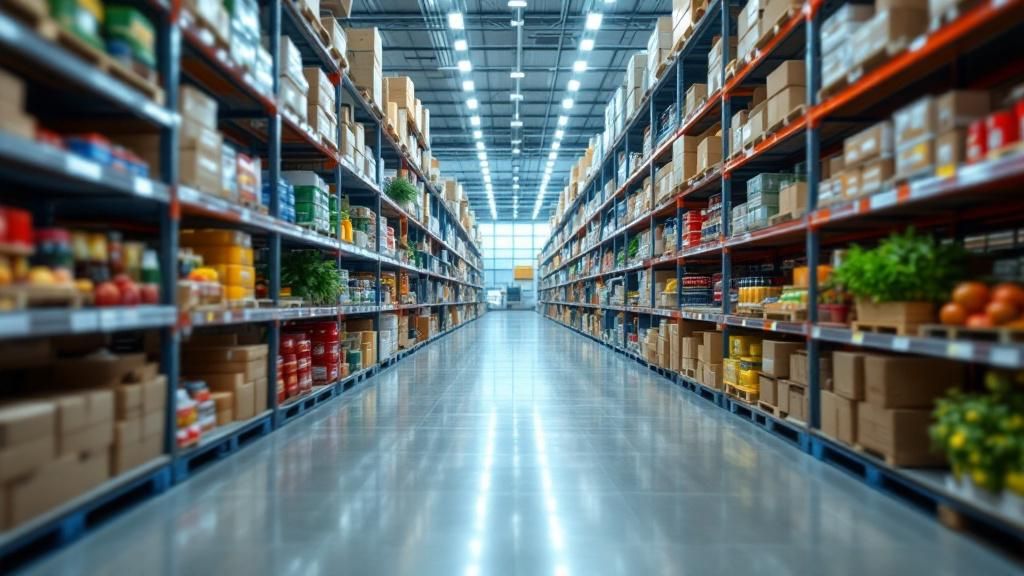
In an era where sustainability concerns and economic performance align, leading retail operators across the UK and Europe are transforming their operations through innovative green programmes. Rather than treating eco-conscious practices as a costly burden, progressive business leaders are finding that advanced sustainability approaches—from sustainable power sources to waste management initiatives—markedly decrease operating expenses whilst simultaneously enhancing brand reputation. This article examines how major retail businesses are leveraging sustainable practices to attain remarkable cost savings, setting new industry standards and demonstrating that profitability and ecological responsibility need not be mutually exclusive.
Energy Efficiency and Renewable Integration
Retail chains throughout the United Kingdom have recognised that energy consumption accounts for one of their most considerable operating costs. By implementing extensive efficiency improvements and shifting to clean energy alternatives, major retailers are realising significant financial savings whilst reducing their carbon footprint. This deliberate transition includes everything from upgrading facilities and systems to allocating resources for solar panels and wind energy partnerships, showing that sustainability and profitability are fundamentally connected in current retail business models.
The integration of clean energy sources into retail businesses has accelerated dramatically over the past few years, driven by both environmental concerns and the reduced expenses of solar and wind technology. Leading supermarket chains and large retail outlets are now supplying considerable shares of their electricity from clean energy sources, either through on-premises systems or extended energy contracts with renewable energy providers. This shift not only decreases dependence on unstable conventional energy markets but also offers businesses with greater energy price stability and reliability for financial planning.
Beyond renewable energy adoption, retailers are committing substantial resources to structural envelope enhancements, encompassing improved insulation, high-performance windows, and advanced heating and cooling systems. These infrastructure upgrades, despite requiring upfront capital expenditure, deliver rapid returns through lower energy costs and enhanced customer experience. Furthermore, many UK retailers are benefiting from government support programmes designed to encourage sustainable business practices, enabling these investments to become more accessible to organisations of all sizes.
LED Lighting and Smart Controls
LED technology has revolutionised retail lighting, offering energy consumption reductions of up to eighty percent compared to traditional incandescent and fluorescent systems. Large retail operators have methodically converted outdated lighting infrastructure with LED systems throughout their stores, warehouses, and distribution centres. The extended lifespan of LED bulbs markedly decreases servicing costs and labour demands, whilst simultaneously upgrading lighting quality and developing more attractive retail spaces that boost customer contentment and revenue results.
Smart lighting control systems represent the next advancement in retail energy optimisation, employing sensors, timers, and artificial intelligence to optimise illumination based on foot traffic, natural daylight availability, and time of day. These intelligent systems dynamically modify lighting levels in instantaneous fashion, minimising unnecessary energy consumption whilst maintaining optimal visibility for both customers and staff. Integration with building management systems enables retailers to track energy usage patterns, detect inefficiencies, and introduce targeted improvements across their entire estate.
- LED bulbs consume eighty percent less energy than traditional lighting systems.
- Smart sensors automatically adjust brightness according to occupancy levels.
- Daylight harvesting systems reduce electric lighting during daylight hours.
- Lower upkeep expenses due to extended LED bulb lifespan and durability.
- Improved patron satisfaction through superior light output and atmosphere.
Supply Chain Enhancement and Waste Reduction
Modern retail chains are comprehensively transforming their distribution systems to remove operational bottlenecks and reduce wastage at every stage. By implementing advanced logistics software and instantaneous inventory control systems, retailers can accurately predict customer demand, prevent overstocking issues, and reduce redundant shipping. These digital improvements not only optimise workflows but markedly lower fuel consumption and linked greenhouse gas output. Furthermore, efficient logistics systems minimise goods deterioration and damage during transit, directly translating to improved profit margins whilst also decreasing environmental impact.
Packaging represents a considerable part of store waste, prompting forward-thinking retailers to transform their method of product safeguarding and display. Many leading chains now employ biodegradable, recyclable, and minimalist packaging formats that markedly lower packaging expenses whilst attracting environmentally conscious consumers. By collaborating with manufacturers to harmonise packaging dimensions, retailers accomplish improved stock storage and transportation logistics. These tactical changes deliver considerable savings through reduced packaging material expenditure, lower storage requirements, and lower disposal costs, illustrating that sustainability and cost reduction are inherently intertwined.
Waste minimisation schemes extend beyond packaging into extensive reuse and recycling efforts across retail settings. Retailers are establishing circular systems where items returned by customers, defective stock, and excess goods are reconditioned, resupplied, or properly recycled rather than disposed of. These programmes produce supplementary earnings through secondary markets whilst reducing waste sent to landfill. Team education and participation in waste prevention programmes build a commitment to sustainability, improving staff morale and loyalty whilst also lowering running costs associated with waste disposal and management.
Circular Economic Initiatives
Circular economy principles are revolutionising how retailers approach product lifecycles and resource use. Rather than the standard “take-make-dispose” model, forward-thinking retailers are implementing closed-loop approaches where products are designed for long-term use, repairability, and eventual reuse. Extended producer responsibility initiatives incentivise customers to return damaged goods for repair or correct disposal, building long-term sustainable operations. These programmes decrease the need for primary materials, reduce manufacturing expenses through material reclamation, and foster customer loyalty through demonstrable environmental commitment and open environmental disclosure.
Leading retailers are launching take-back schemes and refurbishment facilities that extend product lifecycles whilst unlocking residual value. Customers returning used apparel, tech products, or domestic goods receive rewards including voucher discounts or loyalty points, driving uptake and sustained participation. Refurbished products are reintroduced into inventory at reduced price points, reaching cost-conscious consumers and optimising profit margins. This cyclical model simultaneously reduces procurement expenses for new inventory, reduces disposal expenses, and enhances brand differentiation in an highly contested retail landscape where green credentials substantially shape consumer purchasing decisions.
Customer Engagement and Brand Worth
Retailers implementing green strategies have uncovered a key factor for customer engagement and brand commitment. Consumers increasingly prefer shopping with sustainability-focused companies, making environmental commitments a key differentiator. By clearly sharing their green efforts—whether through environmentally responsible packaging, low-carbon shipping methods, or sustainable sourcing—retailers strengthen emotional connections with customers. This heightened engagement drives more frequent buying, favourable customer referrals, and enhanced brand perception, ultimately boosting financial performance whilst simultaneously reducing environmental impact.
The connection between sustainability and brand value has grown undeniable in today’s marketplace. Retailers promoting environmental responsibility draw in socially conscious audiences and differentiate themselves from competitors. Enhanced brand reputation supports premium pricing options and customer retention, offsetting starting investments in sustainable infrastructure. Furthermore, accolades and public recognition of sustainability achievements enhance brand visibility and credibility. These related gains demonstrate that environmental stewardship represents not simply a cost-reduction strategy, but a complete commercial investment that fortifies brand equity and ensures enduring market relevance in an expanding eco-aware consumer landscape.
